


When people think about social media marketing, platforms like Facebook, Instagram and LinkedIn are usually the first to come to mind. Pinterest, however, shouldn’t be overlooked. Traditional social media platforms are typically ephemeral, with posts quickly disappearing from users’ feeds, but Pinterest allows content to continue working months, or even years, after it’s been published. For businesses creating products, blogs, or visual content, Pinterest could be the missing piece of your social media marketing strategy.
Whether you’re completely new to the platform or wondering if it’s worth investing your time, here’s everything you need to know about Pinterest marketing for SMEs.
What is Pinterest?
Pinterest is essentially a visual search engine. Unlike traditional social media platforms, it’s not primarily designed to keep users scrolling, it helps people discover useful content and directs them to external websites.
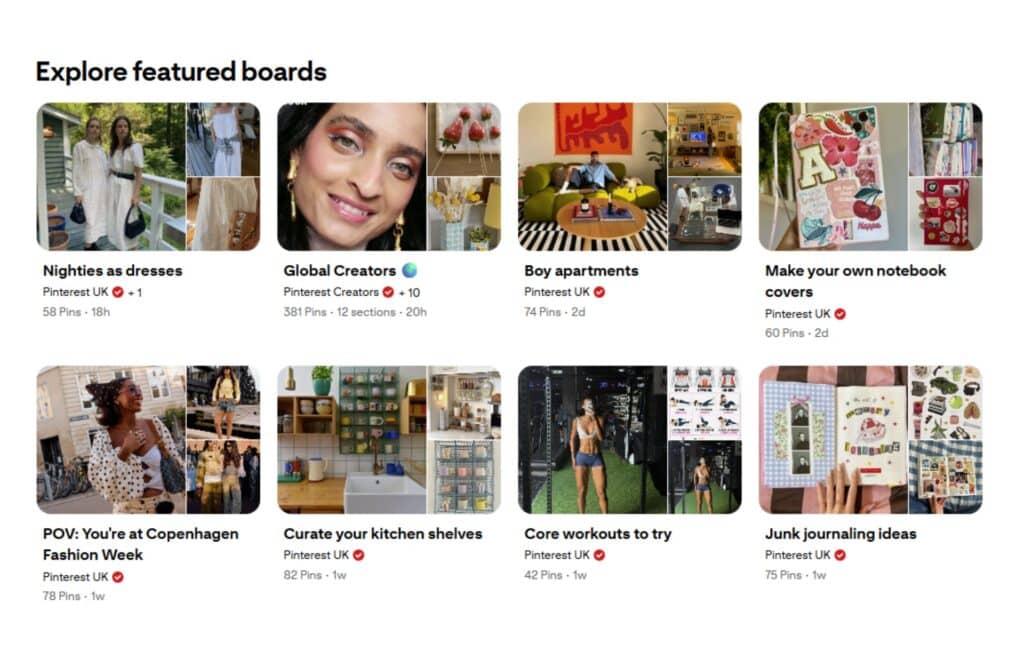
People use Pinterest to search for ideas, save inspiration, and plan future purchases or projects. Users search using keywords in much the same way as they would on Google. Pinterest content is made up of ‘Pins’; these are individual images, videos or graphics that link back to an external piece of content. You can find anything from home renovation ideas, travel tips and recipes to marketing advice, infographics and business templates. Users then organise these Pins into ‘Boards’, which are themed collections allowing them to save ideas for future reference.
Who uses Pinterest?
Skipping Pinterest means you’re missing out on a global audience of 640 million monthly active users. Although much smaller than the giants of Meta, TikTok and YouTube, it’s growing rapidly, especially amongst Gen Z. And in the UK, the platform reaches users across a wide range of age groups, engaging around 30-40% of the following demographics: 18–24, 25–34, 35–44 and over 45.
While users tend to visit Facebook, Instagram and TikTok to scroll, Pinterest is different. They’re researching, planning future purchases, comparing options or looking for solutions, making them much more likely to engage with helpful, relevant content than someone casually browsing a social feed. Pinterest users aren’t typically searching for brands, either. 97% of user searches on the platform are unbranded, meaning users are actively seeking ideas rather than a specific company. Pinterest users simply want to find relevant, quality content.
What are the benefits of Pinterest marketing for SMEs?
One of Pinterest’s biggest advantages is the lifespan of its content. Often on social media channels, posts receive engagement within the first 24 to 48 hours before disappearing. However, because Pins appear in search results and recommendations, they can continue generating impressions, saves and website clicks for months or even years after being published. Also, Pinterest’s algorithm focuses on relevance rather than popularity. It recommends Pins based on what people search for, save and engage with, meaning businesses can reach entirely new audiences without the need for a large following.
Creating quality content is time-consuming, so it’s important to squeeze as much value from it as possible. Pinterest provides an excellent way of repurposing existing content. Think of it as creating multiple, intriguing gateways to your content. A single blog post, for example, can generate multiple Pins. Create new Pins using different imagery, headlines and captions, each targeting slightly different but relevant search terms. The same applies to videos, guides, case studies and downloadable resources. Rather than creating entirely new content, Pinterest allows you to maximise the reach of content you’ve already invested in.
Most social media platforms are designed to lock you into a doomscroll, they want to keep you within the app for as long as possible. Pinterest, however, is designed to send people elsewhere. Most businesses understand the value of appearing in Google search results, but far fewer realise there’s another search engine that can drive highly engaged visitors to their website. Each Pin you create can link directly to a page of your choice. Think of Pins as a way of beautifying a URL link. Pinterest marketing essentially combines the best elements of search engines and social media. Like Google, users search using keywords to find answers and inspiration. Like social media, content can be shared, saved and recommended to others.
Is Pinterest marketing right for your business?
Pinterest marketing won’t be right for every business. Visually driven brands will have the most success, especially those in travel, home improvement, beauty and fashion, food, and similar. However, Pinterest is surprisingly versatile. Professional service businesses can use the platform to share helpful blogs, guides, industry insights, case studies and educational content. If your business answers common customer questions or helps people make informed decisions, Pinterest could be a valuable source of relevant website visitors.
There are downsides to be considered. Pinterest isn’t a fast-moving platform; it takes time to build momentum, so you shouldn’t expect immediate results. If you’re unfamiliar with the platform, it could be a while before you learn what performs well and what doesn’t. Pinterest is also heavily reliant on consistent content creation. Creating content is time-consuming, so Pinterest risks becoming yet another time sink when your skills could be better employed elsewhere. If you don’t regularly create the sort of content that succeeds on Pinterest, like blogs and infographics, Pinterest could be more of a burden than an enhancement.
Slotting in the missing piece of your social media marketing strategy
Pinterest offers another method for enhancing your SEO, as well as the opportunity to maximise the value and reach of the content that you already produce for your SME. With Pinterest, businesses can assemble a library of content that continues to attract new audiences, drive website traffic and support sales over time. But if your audience doesn’t actively search for ideas or inspiration online, or you don’t regularly produce the right kind of content, Pinterest is unlikely to be a valuable addition to your social media marketing strategy.
If you would like to find out more about social media marketing strategy and if Pinterest could be a good fit for your SME, contact our team today.